Golf cart GPS systems are priced on a per-unit, per-month basis. Across the industry, costs generally range from $20 to $80 per cart per month depending on the hardware, software features, fleet size, and what’s included in the package. Courses with larger fleets typically negotiate lower per-unit rates.
Reach Golfers pricing is customized to fleet size. Contact us to get a quote built around your specific operation.
What varies most between vendors isn’t the base price. It’s what that price actually includes, and what gets billed separately.
What Does a Golf Cart GPS System Actually Cost?
The per-unit, per-month model is standard across the industry. What that number covers, though, differs significantly from one vendor to the next.
Some providers advertise a low monthly rate and bill separately for installation, hardware replacement, rendering updates, and customer support. Others bundle everything into one number. Before comparing quotes side by side, it’s worth understanding exactly what’s in each one.
Here are the primary topics to address with any vendor:
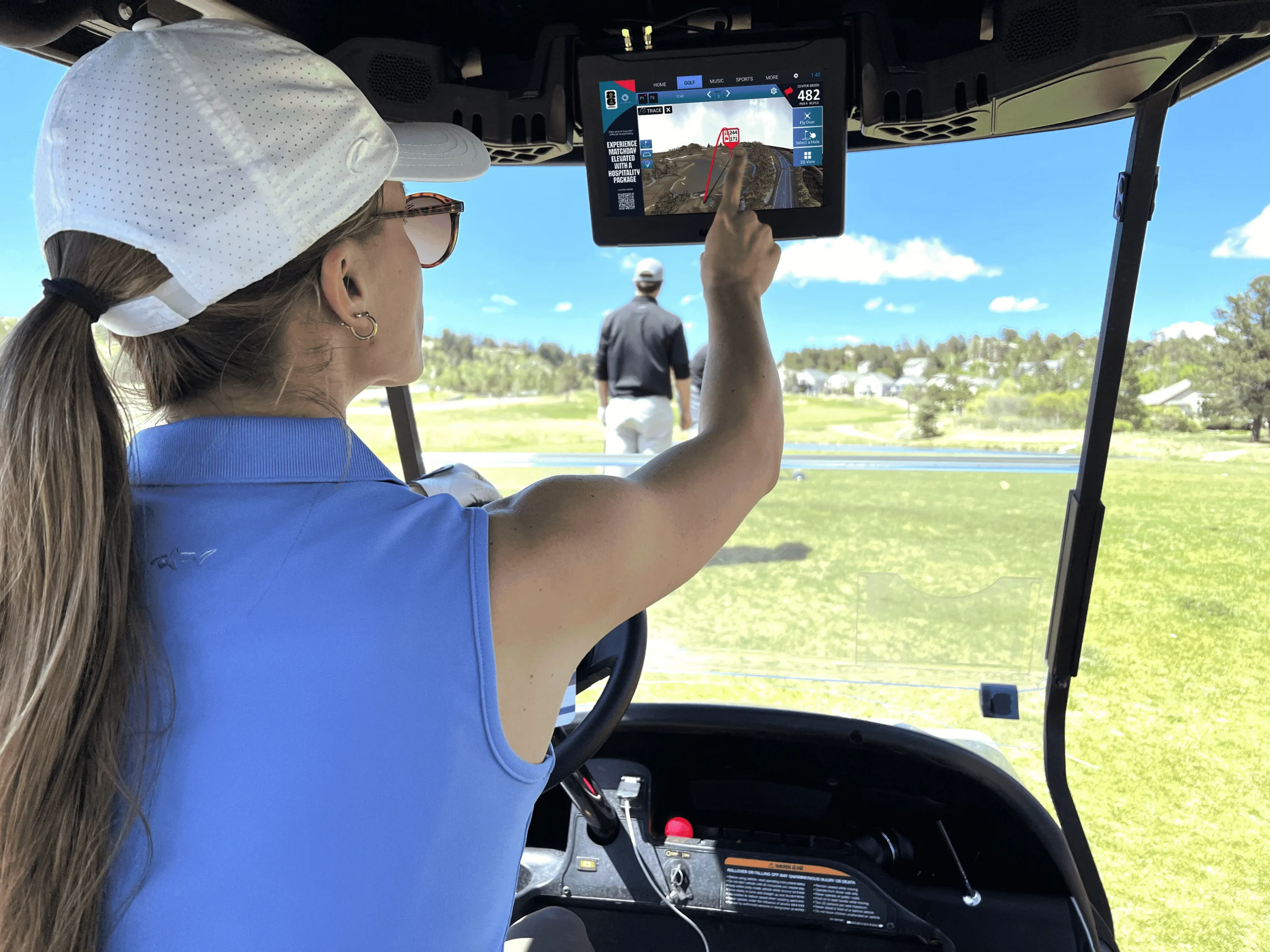
- If you’re considering cart-mounted GPS screens, the base quote is often a GPS ‘tag’ only and the on-cart screens can increase the cost significantly.
- Software licensing is sometimes tiered by feature set, including role-based permissions for users and dashboard access.
- Course rendering (hole graphics) is often an additional expense, and some vendors charge for updates.
- There are full-service and self-service installation and setup options. Of note, most installs take weeks whereas Reach Golfers is full-service and installed within 4 hours.
- Cellular data and internet connectivity is often a separate line item.
- Ongoing and dedicated customer support varies widely.
- Some vendors charge for major software updates and new features.
Reach Golfers bundles hardware, two batteries per unit, charging stations, software access, and a dedicated Customer Success Manager into a single monthly per-unit rate. There is a one-time charge for 3D hole rendering, on-site white-glove installation, and shipping which is clearly outlined in your contract – no surprises once the contract is signed!
What Factors Drive the Cost of a Golf Cart GPS System?
Fleet size. This is the biggest variable. Vendors price by the unit, so a course with 40 carts pays more per unit than a course with 120. Most providers offer volume-based pricing tiers so the per-unit rate drops as fleet size increases. If you manage multiple courses, ask about multi-property pricing.
Hardware quality. Screen size, weatherproofing rating, and power source all affect cost. A 7-inch screen that requires wiring into the cart’s OEM battery system is a different product than a 10-inch weatherproof touchscreen with its own independent power supply. The wired option may look cheaper upfront, until it causes cart electrical issues or voids a warranty.
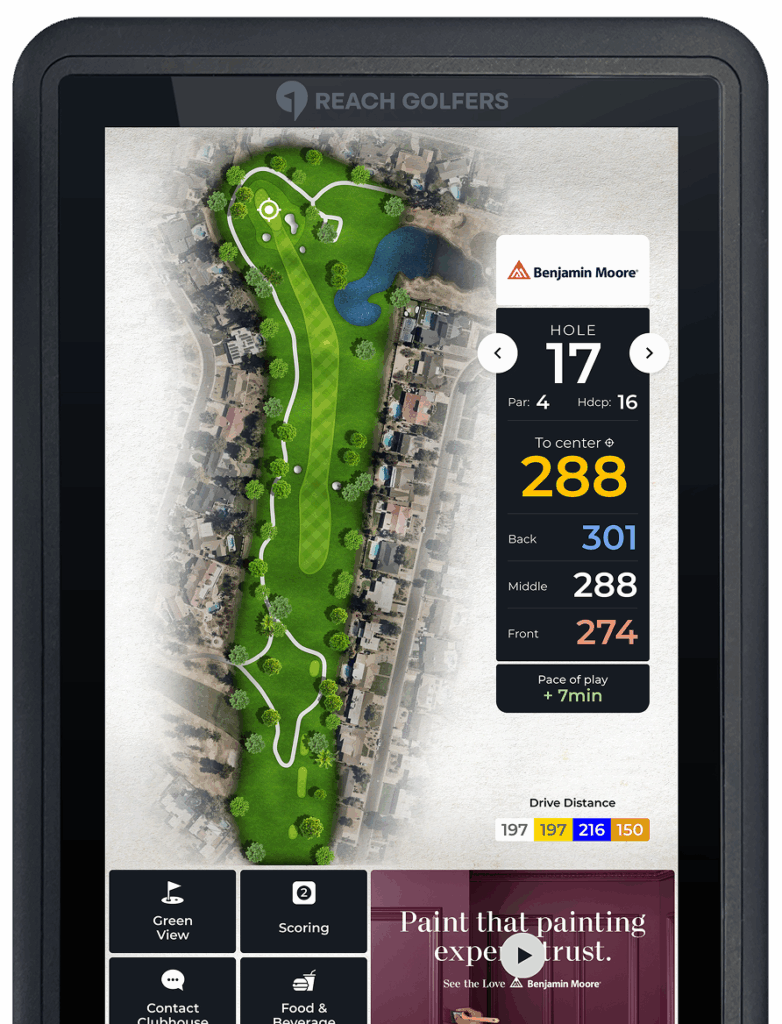
Software feature depth. Basic GPS systems show a course map and yardages. More advanced platforms add AI-powered pace of play tracking, two-way messaging, geofencing, food and beverage ordering integration, and fleet management dashboards. The more the software does, the more it costs and the more revenue and labor savings it can generate in return.
Installation model. Self-install systems cost less because you bear the time and risk. White-glove installation where the vendor’s team comes on-site, mounts every unit, tests all geofences, renders the course, and trains your staff costs more and is worth it for most courses that don’t have dedicated IT resources.
Contract length. Month-to-month pricing carries a premium. Annual or multi-year contracts typically come with lower per-unit rates. Most courses in this category sign 2 to 4 year agreements.
What Is the ROI of a Golf Cart GPS System?
Cost only tells half the story. The question most operators should be asking is what the system pays back, and how quickly.
The revenue and cost recovery levers are fairly consistent across courses that implement GPS tracking:
Additional daily rounds. Improving average round time by 15 to 20 minutes opens up additional tee time capacity on busy days. On a course running 180 rounds on a Saturday at a $75 green fee, one added tee time for four players is $300 in daily revenue. Over a full season of weekend play, that compounds quickly.
Reduced ranger labor. GPS tracking lets one employee monitor the full course from a dashboard and message carts directly. Courses that previously needed two or three rangers per shift often reduce to one. At $18 to $25 per hour for ranger labor across multiple shifts, the savings are real and recurring.
F&B revenue lift. Golfers who feel the round is moving well stop at the turn, order from cart attendants, and use in-cart ordering features. Golfers running behind skip all of it. Pace management, timely reminders to order ahead, and showing a partial menu are the most under-appreciated drivers of food and beverage capture rate.
Turf protection savings. GPS geofencing reduces cart traffic in restricted areas without cart kill. Courses report meaningful reductions in turf repair and overseeding costs, particularly on courses with wet season cart path policies.
Green fee premium. Courses known for a superior on-course experience, including accurate GPS, smooth pace, and interactive technology, can justify higher green fees and see stronger repeat booking rates. Reach Golfers’ customers have raised green fees up to $8/round in the immediate season(s) after adding the GPS.
Local business advertising sales. Reach Golfers turns your cart GPS screens into a revenue stream with our local business advertising opportunity. We do all the heavy lifting – from email templates to pricing and billing. We maximize revenue for your specific market and split the profit 50/50, which means pure passive income for your course.
With that much lift, investing in a premium golfer-facing GPS screen is arguably the most advantageous investment you can make with the highest ROI of any on-course improvement, especially when comparing it to other significant on-course projects (bunker renovations, irrigation improvements, leveling tees, etc.).
Reach Golfers publishes an ROI model built on real-world assumptions from current partner courses. You can download it here or request a customized version based on your course’s specific numbers.
How Do You Compare Golf Cart GPS Vendors on Price?
Getting an apples-to-apples comparison between GPS vendors is harder than it should be. Here’s a framework that helps:
Ask for an all-in monthly number. Request a quote that includes hardware, software, installation, batteries, chargers, support, and rendering updates. Then ask explicitly what is not included. The gap between the headline number and the all-in number is where most surprises live.
Ask about the hardware replacement policy. Screens on golf carts take abuse. What happens when one breaks? Is the replacement covered, prorated, or billed at full cost? A low monthly rate with expensive hardware replacement can cost more over a 3-year contract than a higher rate with covered replacements.
Ask who does the installation. Vendor-direct installation teams know the product, test everything before they leave, and train your staff in the same visit. Third-party installers vary in quality and familiarity with the system.
Ask what the rendering update process looks like. If you renovate a hole, move a tee box, or add a new green, how long does it take to get updated course graphics? Is there a cost? Some vendors treat this as routine maintenance. Others bill for it.
Ask about the contract exit terms. Understand what happens if you need to exit the contract early, whether due to selling the course, switching vendors, or a change in ownership. This is rarely discussed upfront and worth knowing before you sign.
Is a Golf Cart GPS System Worth the Cost for Smaller Courses?
The ROI case is stronger for high-volume courses, but smaller operations can come out ahead depending on how the system is used.
For a smaller course running 60 to 80 carts and 150 rounds on a busy day, the labor savings alone often cover a meaningful portion of the monthly cost. Reducing ranger coverage by one shift per day at $20 per hour across a full season adds up to several thousands of dollars. And, that’s before accounting for pace improvements, F&B lift, or green fee increases.
The honest answer is that it depends on green fee levels, current labor costs, and how aggressively the course uses the pace management and F&B features. A system that sits in basic GPS mode recovers less than one where staff actively use the dashboard, messaging tools, operational data, and integrations.
That’s why the conversation with any GPS vendor should start with your numbers, not their brochure.
FAQs
How much does a golf cart GPS system cost per month? Most golf cart GPS systems are priced between $20 and $80 per cart per month. The rate varies based on fleet size, hardware quality, software features, and what’s bundled into the monthly fee versus billed separately.
Is golf cart GPS pricing based on fleet size? Yes. Most vendors use volume-based pricing. The per-unit monthly rate decreases as fleet size increases. Operators managing multiple properties can often negotiate multi-site rates.
What is typically included in a golf cart GPS monthly fee? It varies by vendor. Full-service providers include hardware, course rendering, installation, batteries, software access, and ongoing support in one monthly rate. Budget providers often separate these into individual line items. Always ask for an all-in quote.
How long does it take to see ROI on a golf cart GPS system? Most courses recover costs through a combination of labor savings, additional daily rounds, and F&B revenue lift. The timeline depends on green fee levels, current staffing costs, and how actively the course uses the system’s operational features.
Do golf cart GPS systems require a long-term contract? Most vendors offer 1 to 3 year agreements, with longer terms carrying lower per-unit rates. Month-to-month options exist but are priced at a premium. Review early exit terms before signing any agreement.
What is the difference between a basic GPS system and a full golf course management platform? Basic systems show course maps and yardages. Full platforms add AI pace of play tracking, two-way cart messaging, geofencing, F&B ordering integration, fleet management dashboards, and operational analytics. The additional features drive the revenue and labor savings that offset the higher cost.
If you have any questions, we’re happy to help! Contact us today.