Golf courses offer something rare in digital out-of-home advertising: a premium audience, a controlled environment, and impressions from verified humans—not bots. When executed correctly, golf course advertising allows brands to validate performance, measure true impact, and confidently scale their DOOH strategy.
Here’s how that execution actually works.
Key Takeaways: Why Does DOOH Work So Well On The Golf Course?
- Premium audience at scale: High-income, professionally influential consumers physically present on the course
- Guaranteed extended dwell time: 4–5 hours of predictable, distraction-free exposure
- 100% share of voice: No competing ads or environmental clutter
- Cart-level verification: Clear confirmation that a real person was exposed
- Built-in test structure: Natural exposed vs. control group segmentation enables incremental lift measurement
- Outcome-based tracking: Performance measured against real business behavior, not proxy metrics
Why Premium Audience Targeting on the Golf Course Works
Golfers represent one of the most valuable consumer segments in the U.S. media landscape:
- Average household income exceeding $100K
- High concentration of executives, business owners, and senior decision-makers
- 71% of post-pandemic growth has come from golfers under 50
- Strong spending patterns across travel, automotive, insurance, dining, and luxury goods
Critically, the majority of U.S. rounds are played on public and semi-private courses—expanding scale while maintaining audience quality.
For brands already investing in premium media, golfers are a known high-value audience. The question is how to reach them in a way that’s measurable, bot-free, and operationally sound.
Why Golf Courses Are a Unique DOOH Advertising Environment
Most out-of-home environments introduce variables that complicate attribution: inconsistent dwell time, overlapping exposure, environmental noise, and limited ability to confirm who actually saw the message.
Golf courses operate differently. You can expect:
- Predictable dwell time: Golfers spend 4–5 hours on course, creating extended, repeatable exposure windows with sustained attention.
- Low-noise conditions: Unlike urban or roadside placements, golf courses have minimal competing visual stimuli—messages stand out without cluttered feeds.
- Structured flow: Tee times, course routing, and time in carts create highly predictable exposure environments that can be modeled at scale.
- Repeatable conditions: Campaigns deploy across similar course environments, supporting consistent execution and analysis.
These characteristics don’t just improve reach; they make it possible to answer the harder questions: Is this working incrementally? By segment? At scale? You can easily find out.
What Proven Execution Looks Like: FanDuel and Reach Golfers
Proven DOOH advertising can’t rely on exposure alone. It requires intentional execution designed to remove ambiguity, isolate impact, and produce results that withstand scrutiny.
A campaign deployed by Reach Golfers for FanDuel illustrates how disciplined execution works in practice.
Designing for Attribution (Not Assumption)
OOH often struggles with attribution because exposure is inferred rather than confirmed. The FanDuel campaign was designed specifically to avoid that pitfall by treating the golf course as a controlled media environment where impressions are delivered to real people in real time.
Clear Exposure Definition
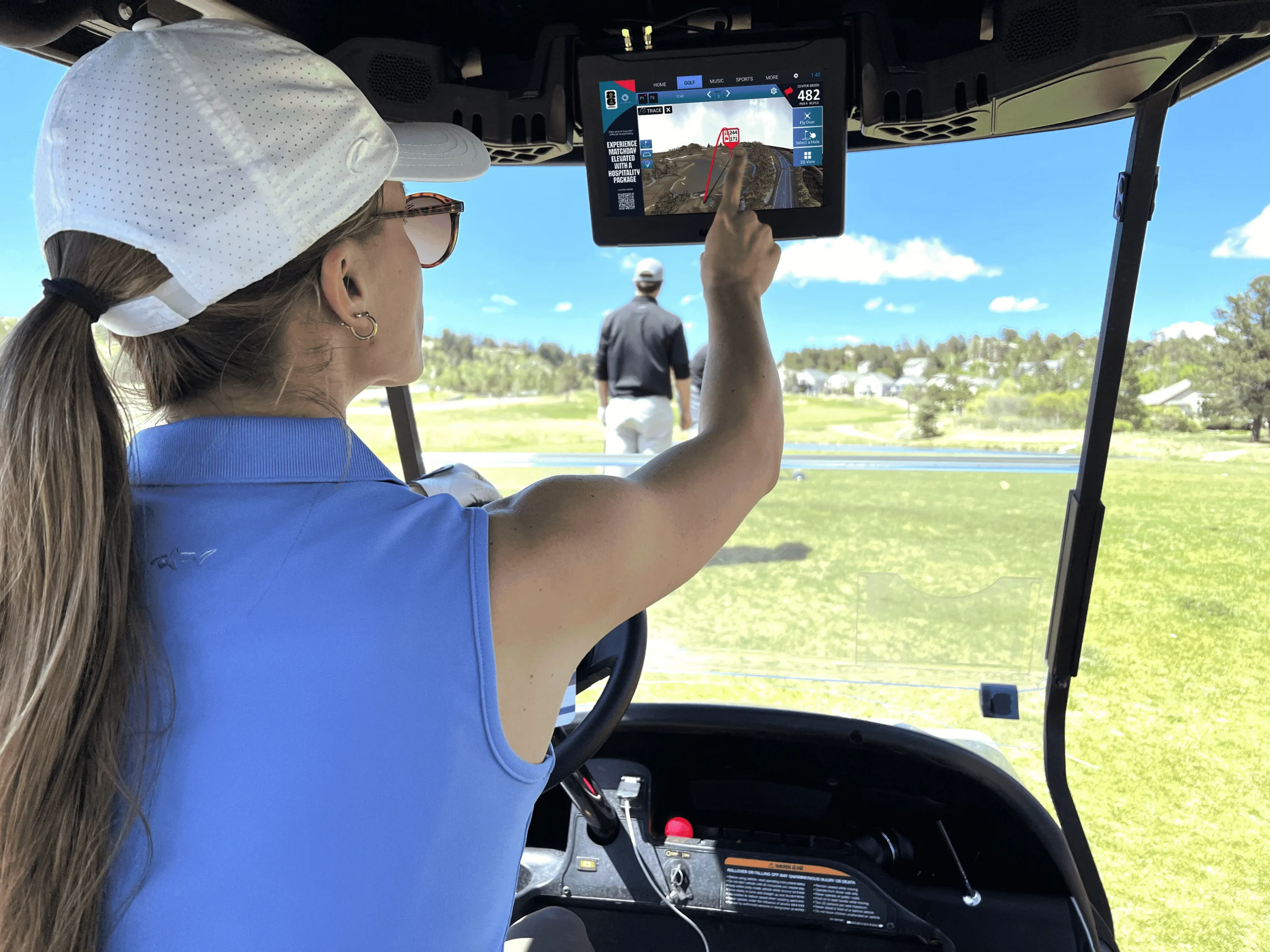
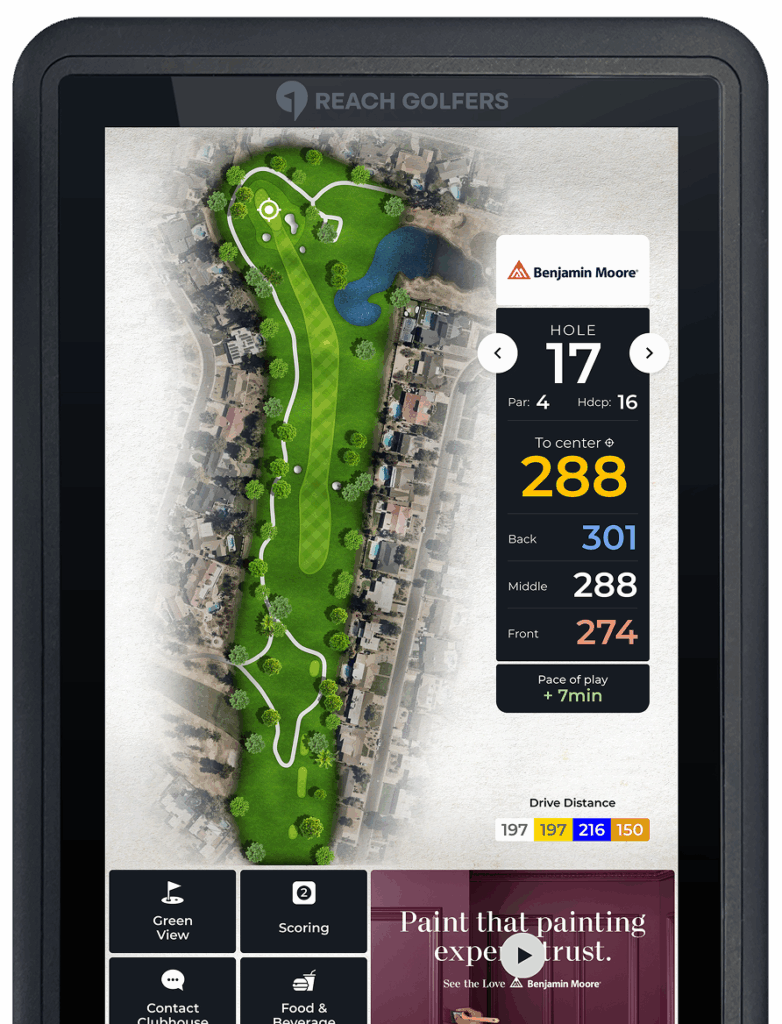
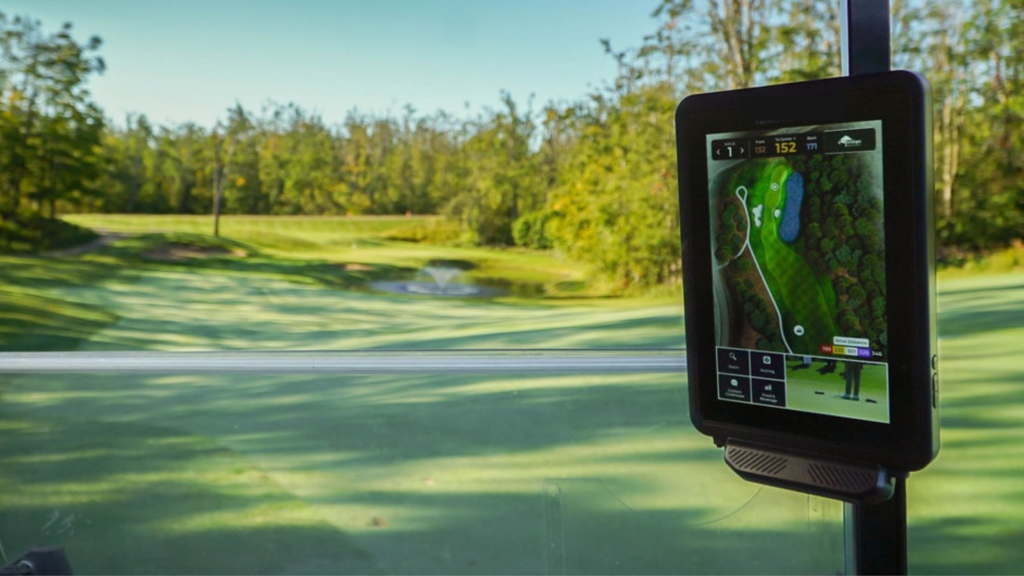
Attribution struggles when exposure is inferred rather than confirmed. In this campaign, ads were delivered through screens embedded directly in golf carts, creating a clearly defined exposure unit:
- The screen is physically located in the golfer’s cart
- The golfer remains in close proximity for the entire round
- Ads are delivered repeatedly during a multi-hour session
Exposure is validated through screen playback logs, time-based delivery aligned with round duration, and course- and cart-level deployment data. This eliminates a common DOOH weakness: ambiguity around whether an impression actually occurred.
Isolating Exposed and Control Groups
Proving impact requires comparison. Here’s how the campaign was structured:
- An exposed group of golfers who received the ads
- A control group of comparable golfers who did not
Golf courses make this practical. They’re fixed physical locations that can be geofenced, and nearly everyone who enters plays a full round. This enables brands to evaluate incremental lift—not just activity—bringing measurement closer to digital and CTV standards without bot-prone signals.
Outcomes Tied to Business Behavior
Execution credibility depends on what you measure. Comparing exposed and control groups, FanDuel’s campaign produced:
- Deposits: 15.47% lift
- First purchases: 46.52% lift
- App downloads: 159% lift
- Registrations: 66.91% lift
- Overall lift: 95.5%
Because groups were clearly defined, these differences represent incremental impact—not coincidence.
Why This DOOH Methodology Scales
What makes this approach valuable is repeatability. By defining exposure explicitly, structuring control comparisons, and measuring real business outcomes, brands gain a framework they can apply as campaigns expand across courses, regions, or time periods.
The golf course isn’t just a premium placement—it’s a proving ground for DOOH execution before broader rollout.
Executing Proven DOOH Reach On The Course: What to Look For
When brands successfully execute DOOH reach on the golf course, three elements work together:
Why golfers?
- A premium, affluent audience with strong purchasing power
- High engagement during extended time on the course
- Alignment with both brand and performance objectives
Why golf courses?
- Predictable exposure conditions
- Reduced environmental noise
- Natural segmentation that supports testing and validation
Why does disciplined execution methodology matter?
- Clear exposure definition reduces attribution ambiguity
- Control groups enable incremental measurement
- Business-level outcomes validate performance before scale through exposed vs. control comparisons as used in campaigns executed via Reach Golfers
How to Evaluate Your Golf Course Advertising Execution
Before extending digital out-of-home advertising into the golf environment, brands should ask:
- Is exposure clearly defined and repeatable?
- Can the exposed and control groups be isolated?
- Are outcomes tied to real business behavior rather than proxy metrics?
- Can results be validated before expanding spend?
- Is the execution framework repeatable at scale?
When these conditions are met, golf-based DOOH becomes a defensible, scalable extension of an effective media strategy.
Start Your Golf Course DOOH Campaign
Reach Golfers enables brands to reach a premium golf audience through a measurable DOOH platform built into golf carts nationwide, delivering verified impressions to real people on the course.Ready to implement a digital out-of-home advertising program with clear attribution and a path to scale? Get in touch with our team!