Pace of play never really leaves the clubhouse. Golfers talk about it on the first tee. Operators talk about it in staff meetings. At Reach Golfers, we track every round, so we can bring something new to the conversation: real numbers.
What tracking every round shows about pace of play
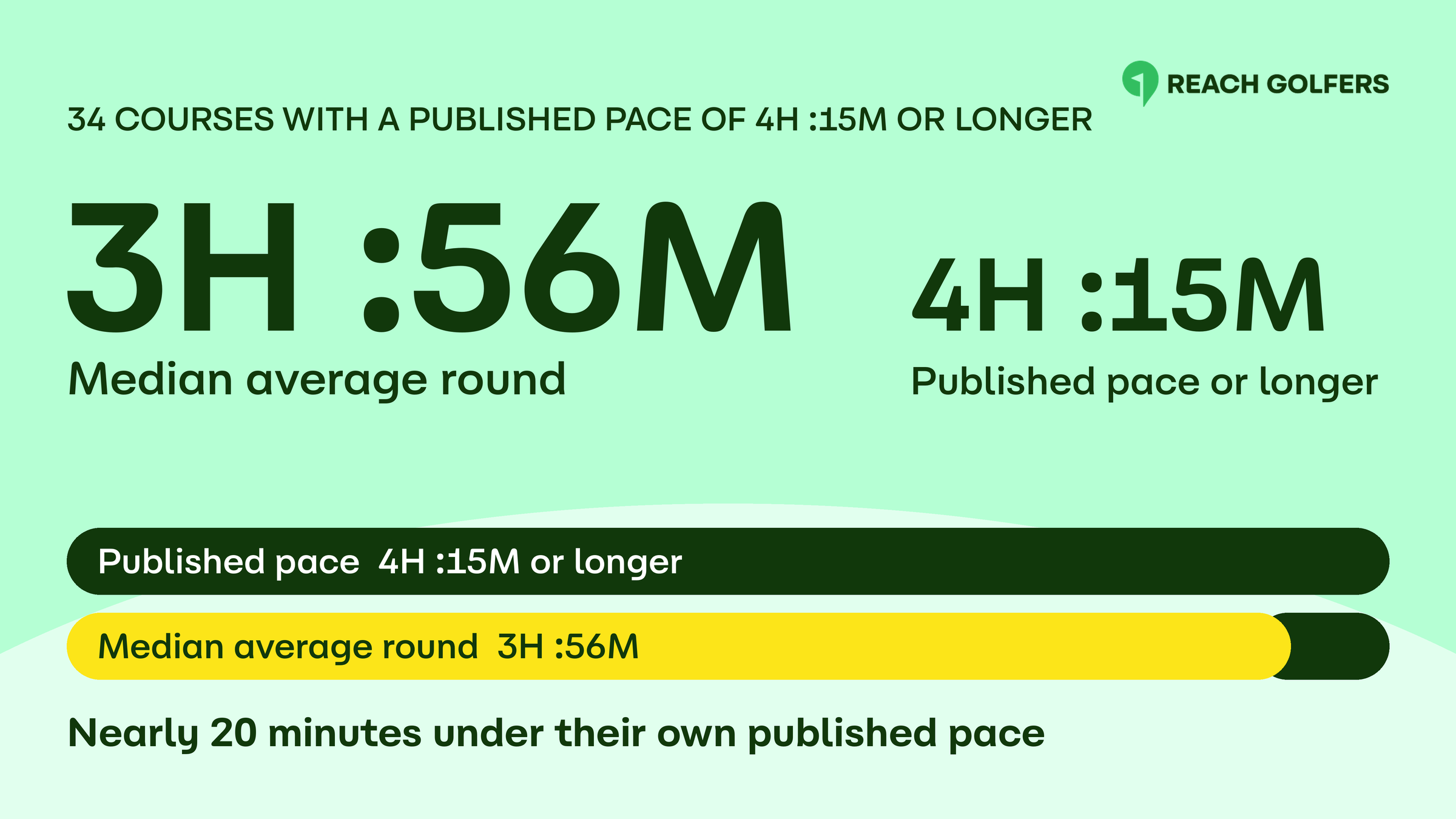
We looked at pace data from a sample of 37 Reach Golfers courses from September 23 to October 20, 2026. Among the 34 courses in that sample with a published pace of 4H :15M or longer, the median average round was 3H :56M.
Source: Reach Golfers Pace of Play reports for a sample of 37 courses in 2026.
Some courses couldn’t reliably benchmark pace of play before Reach Golfers. Since installing, they’re elated they can actually measure it. It’s data they never had.
Were those targets soft to begin with? Fair question. For the first time, courses can measure every round against their own target and see, hole by hole, where the gap is.
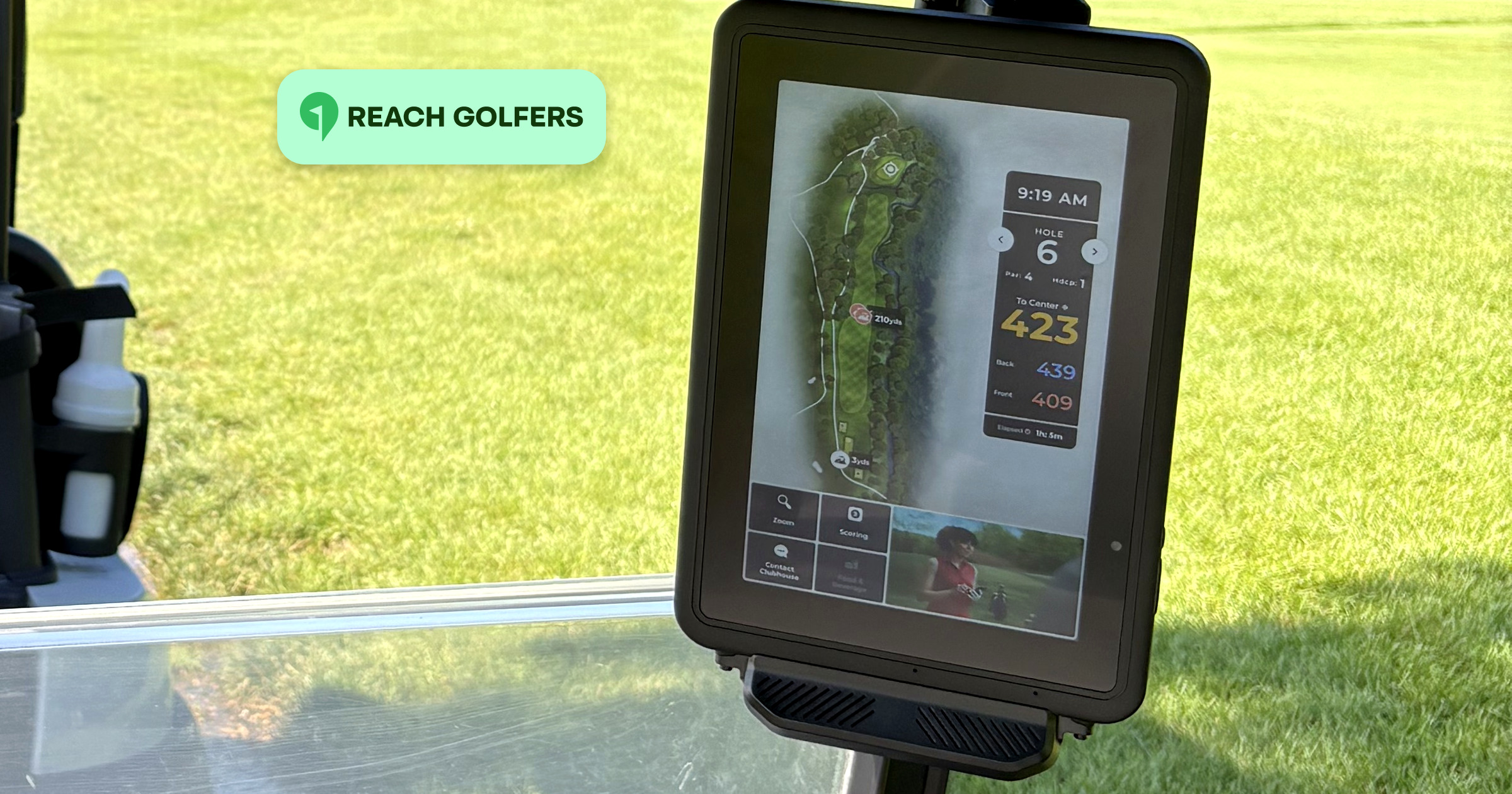
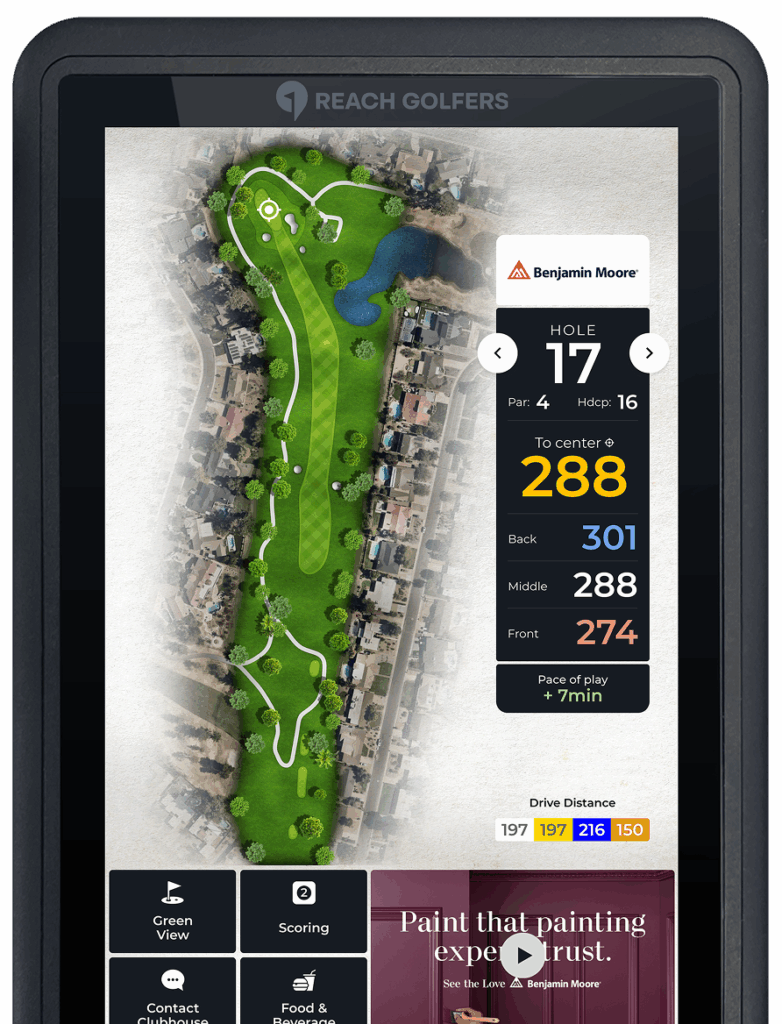
Courses also tell us our system is cutting pace of play time with simple-to-use features like precise pin placements and directional navigation prompts in confusing areas for golfers new to the property. Reach improves pace of play by an average of 18-20 minutes per course after installation.
The precise pin position brings confidence back to the yardage numbers shown on the screen, and after a couple holes golfers ditch the laser rangefinders they’re addicted to on courses without a precise GPS.
Why pace matters to golfers and operators
Operators agree pace is a big deal. In the 2026 Golf Business Pulse Report from the National Golf Course Owners Association, 81% of operators rated pace of play “very important” to the golfer experience, according to MyGolfSpy’s breakdown of the report. Only course conditioning and physical beauty scored higher.
Course conditioning ranked even higher in that same survey. Reach Golfers GPS helps with that too. Geofencing keeps cart traffic away from sensitive areas and helps prevent cart path violations. Staff can protect the turf without shutting carts down.
Golfers feel it too. Writing about that report, MyGolfSpy’s Brittany Olizarowicz put it plainly: “if I know a course regularly takes five or six hours, I’ll have a hard time going back.”
Every golfer should leave your course thinking, “That was worth every penny.” When someone pays $300 and then plays for five hours, that feeling is gone. A five-hour round at that price is unacceptable. This is a massive problem.
For operators, pace touches almost everything. It affects how many tee times you can offer, how relaxed the day feels for staff, and whether golfers come back.
NGCOA also reports that 96% of operators say exceptional customer service remains the most important differentiator. We think a round that flows is a big part of great service. Golfers notice it, even if they never say so.
The trouble with targets that had no data
Most courses publish a pace target. It goes on the scorecard, the starter’s sheet, or a sign by the first tee.
Before Reach Golfers, these courses couldn’t track pace with consistency. Different marshals meant different standards, opinions and timings. They set published pace targets with no real data behind them. The only feedback came from a marshal’s reverse lap around the course or a comment at the counter after the round.
That made pace of play hard to manage. You can’t fix a slow hole if you don’t know which hole is slow. You can’t show a guest how the day played if nobody kept the numbers. And, you certainly can’t confront a member who everyone agrees is slow without independent data.
What tracking every round gives your team
With Reach Golfers GPS, every round is tracked, hole by hole and cart by cart.
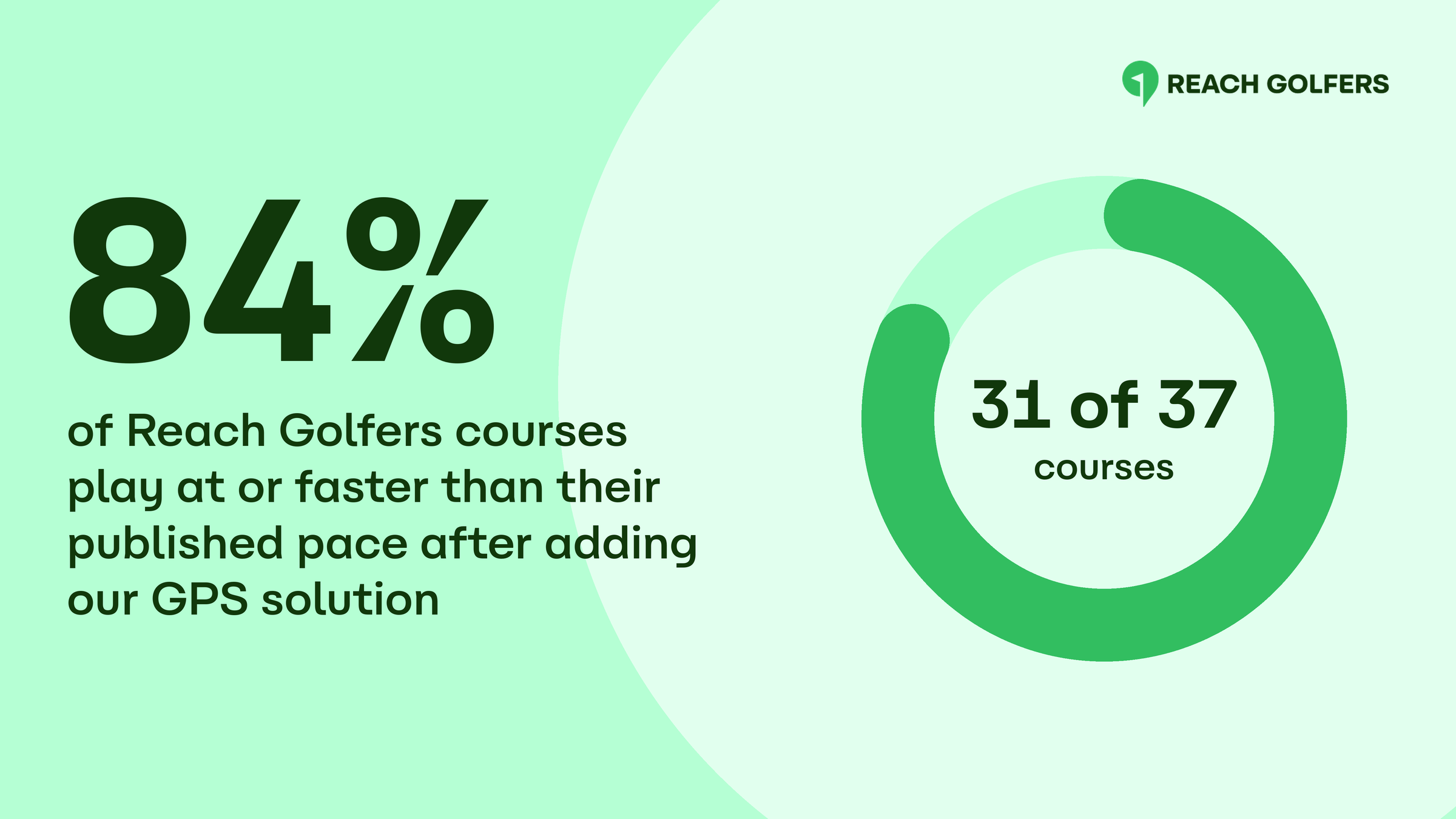
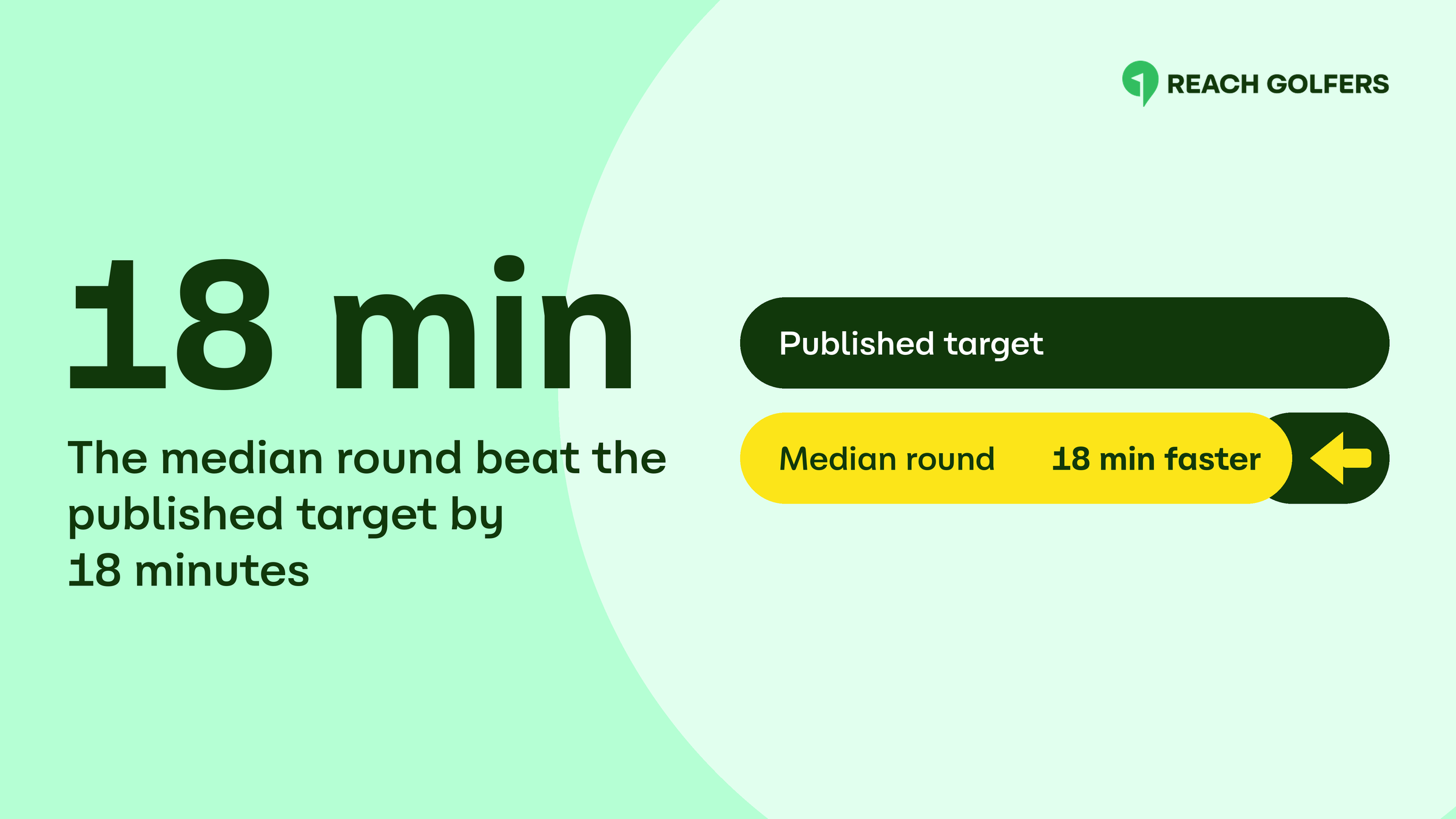
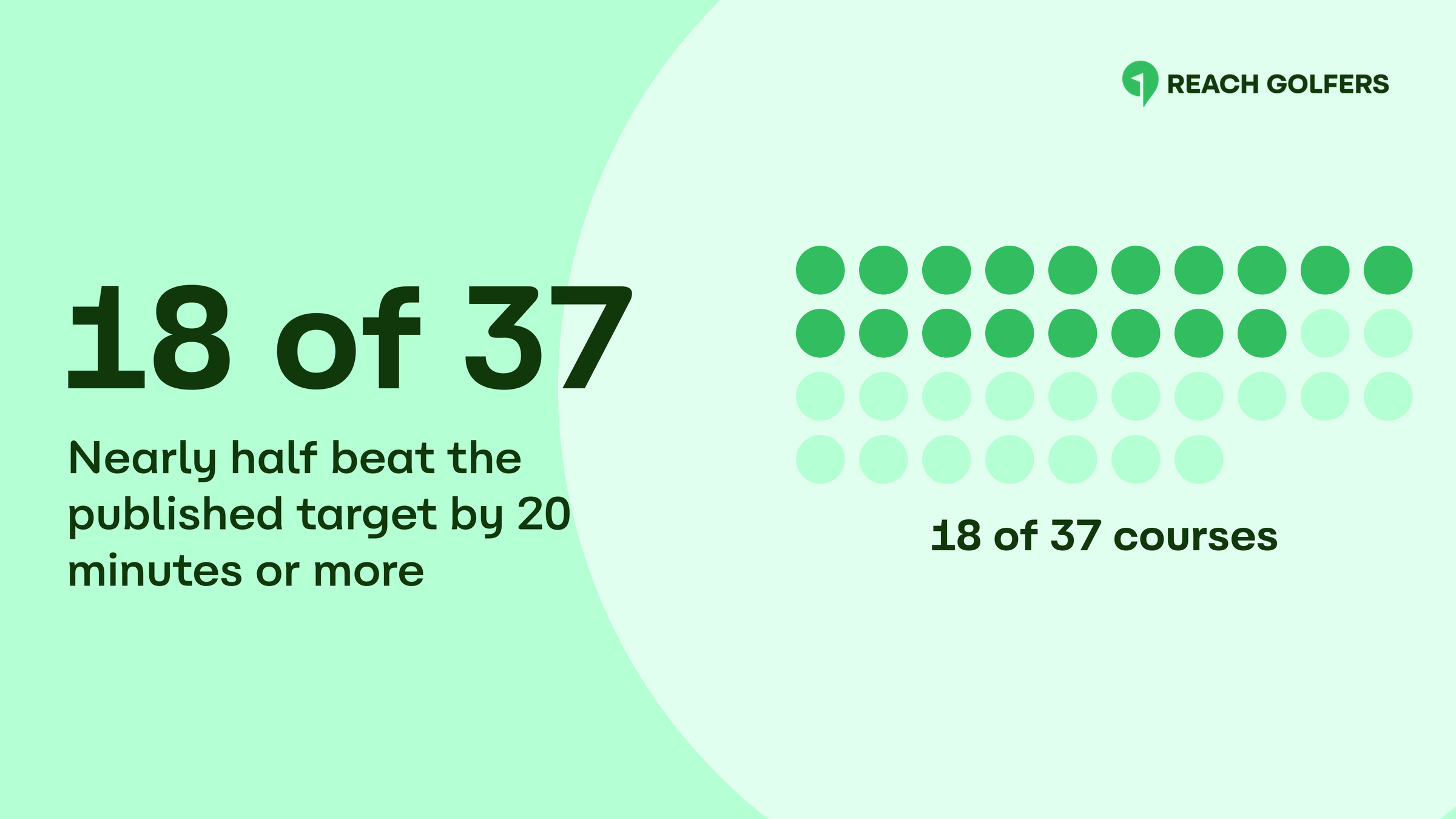
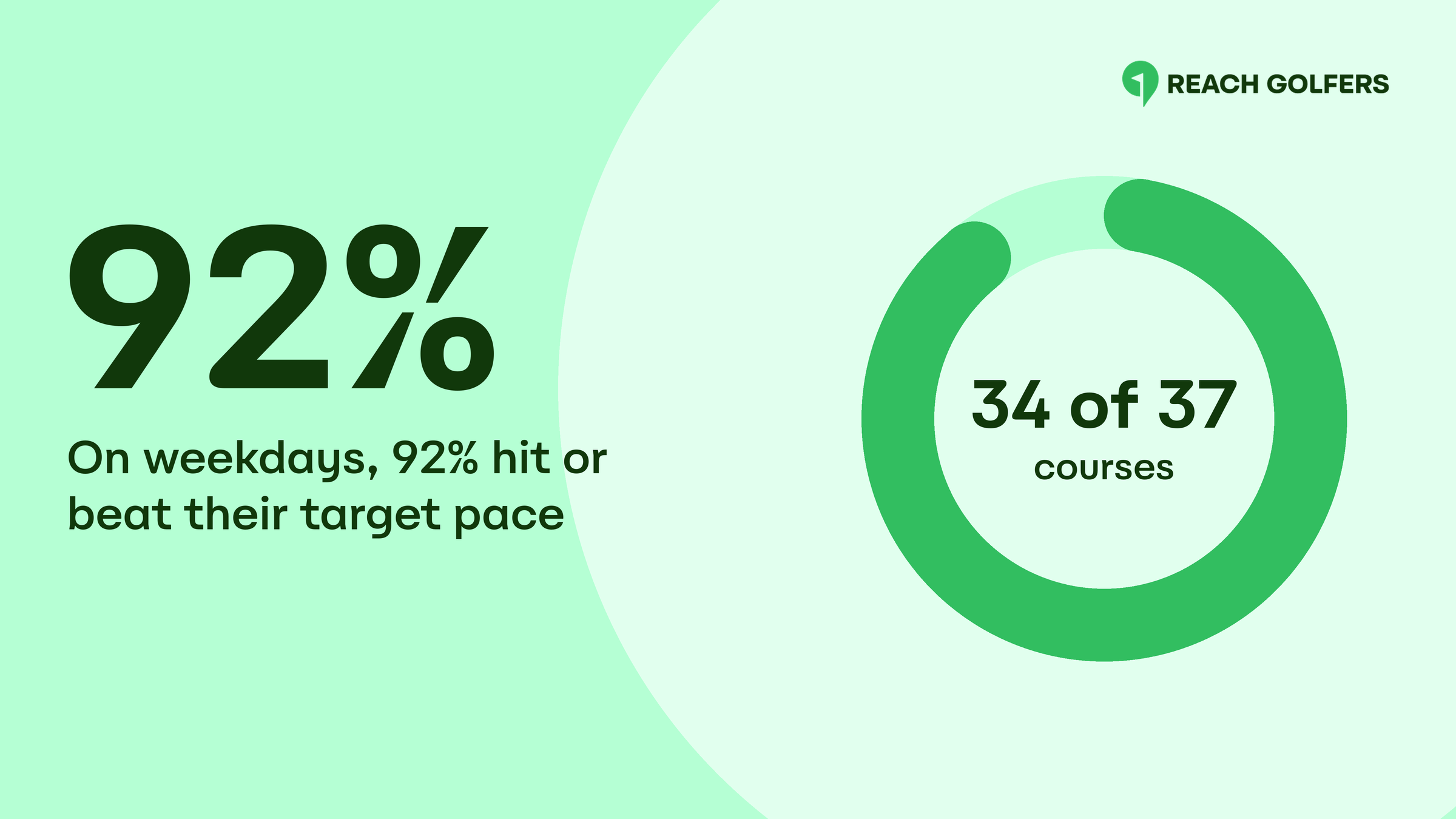
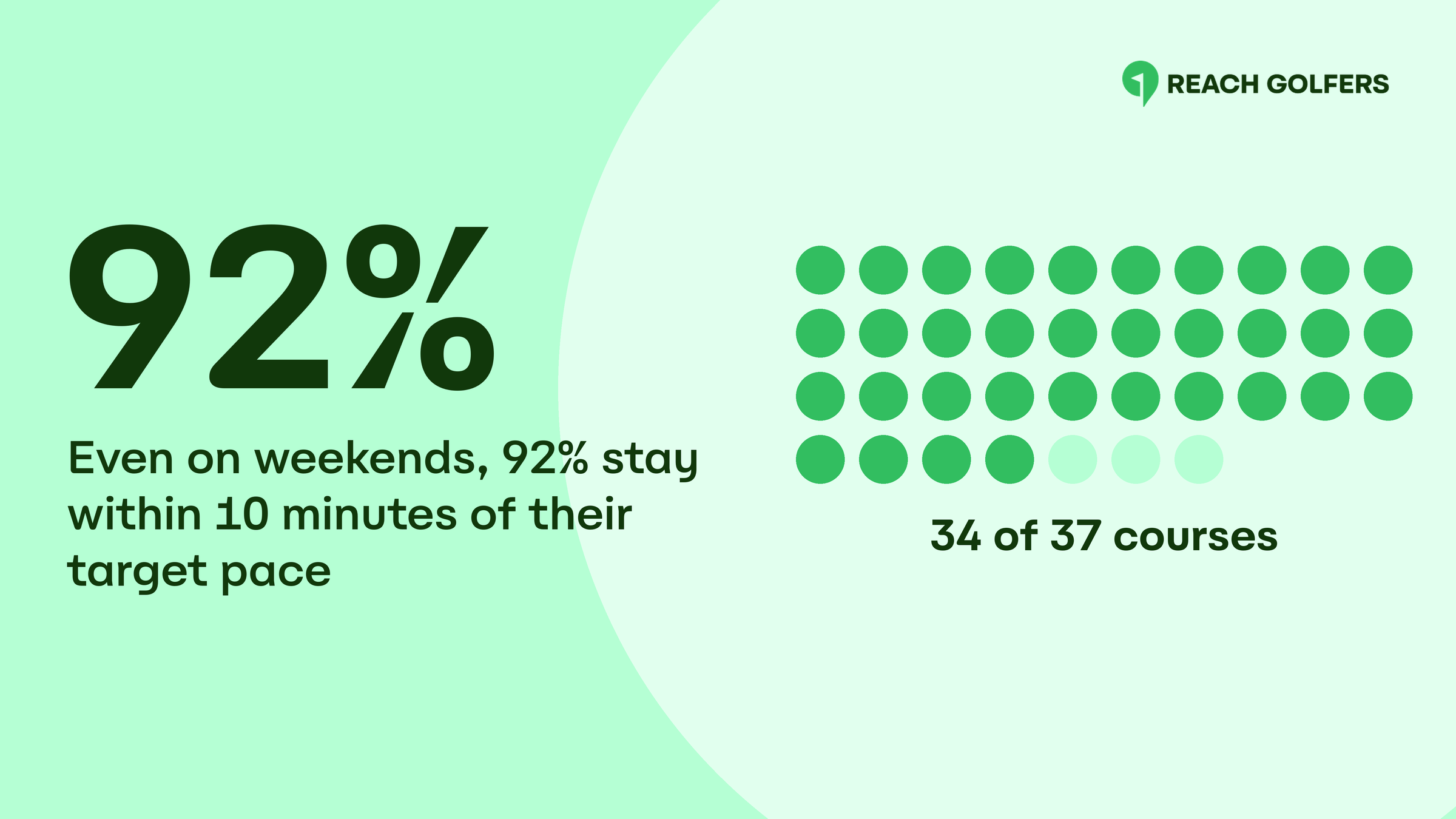
Courses in a sample of 37 we studied beat their published targets by about 18 minutes (median). 84% of the courses in that sample play at or faster than their published pace (31 of 37). Nearly half beat it by 20 minutes or more (18 of 37). On weekdays, 92% hit or beat their target pace (34 of 37). Even on weekends, 92% stay within 10 minutes of it (34 of 37).
So when pace comes up with guests, owners, or staff, courses have real facts to point to. For more background, read how GPS technology is solving golf’s pace of play problem.
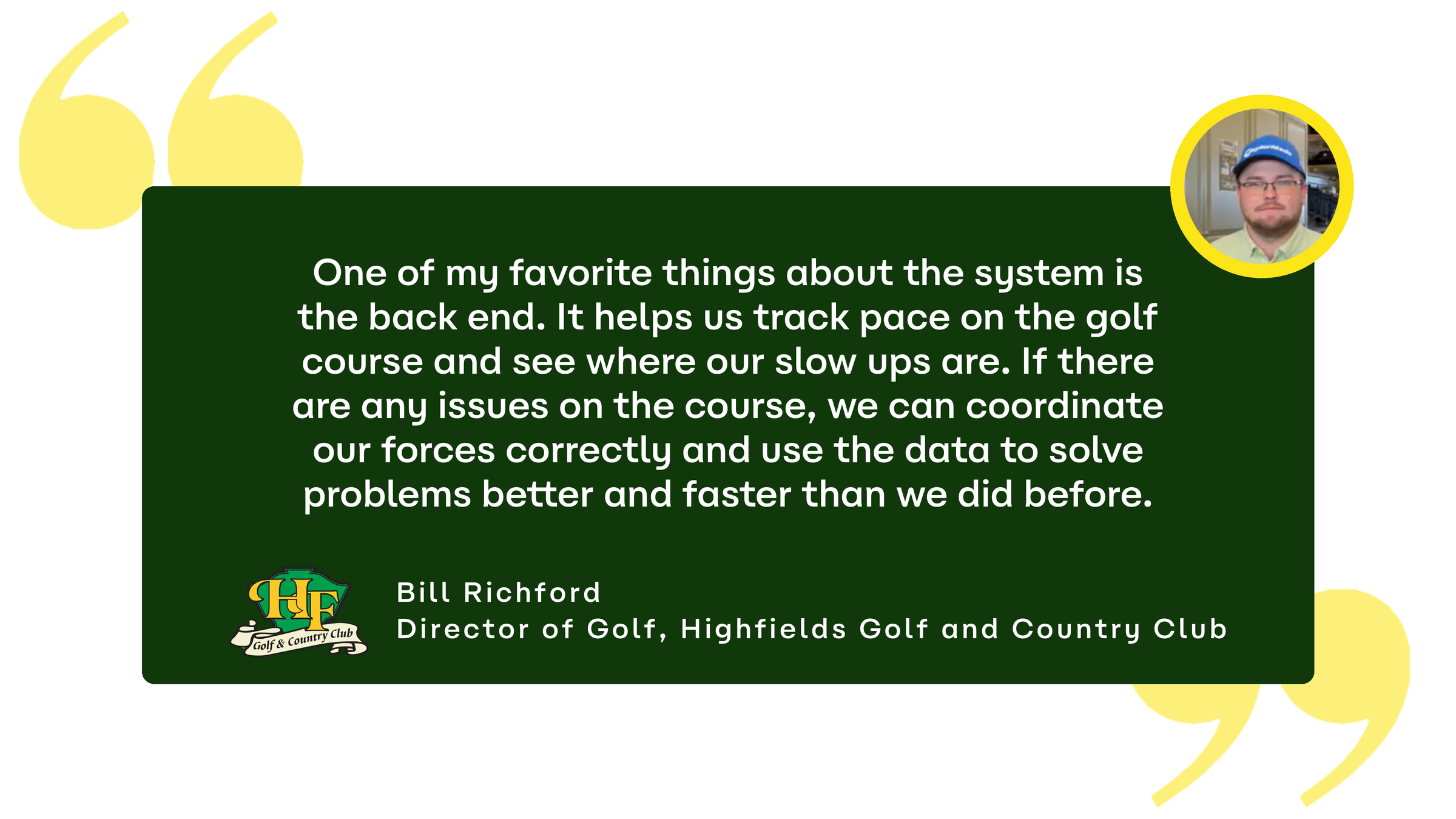
“One of my favorite things about the system is the back end. It helps us track pace on the golf course and see where our slow ups are. If there are any issues on the course, we can coordinate our forces correctly and use the data to solve problems better and faster than we did before.”
– Bill Richford, Director of Golf, Highfields Golf and Country Club
What courses do with pace data
Data only helps when someone acts on it. Here’s how courses put it to work. For even more ideas, see our 6 tips to improve pace of play on your golf course.
- Review pace hole by hole every week. Look for the holes where groups stack up. A tough par 3, a long walk to the next tee, or a tricky pin can slow the whole course. Once you see the pattern, you can plan around it.
- Put a marshal on holes that run red. Hole-by-hole pace visibility shows where the backups start. Send your marshal there first and keep the rest of the course moving. A marshal that finds a golf ball for a golfer is a positive review in the making. Embrace this new role.
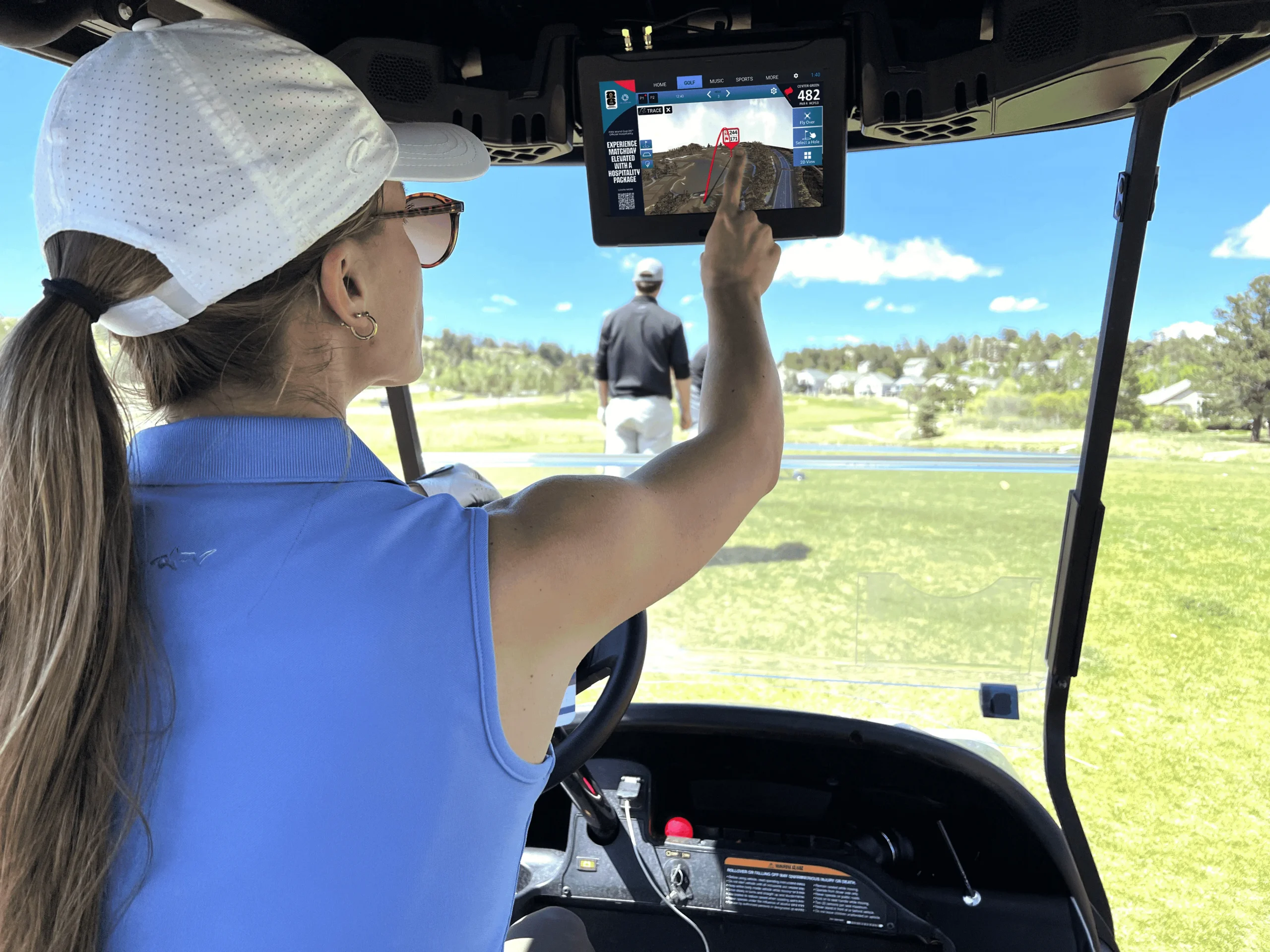
- Use direct to cart messaging from the clubhouse. A friendly note to a group that’s falling behind is easier for everyone than a tense chat on the tee box. Staff can reach the right cart at the right moment, include facts about the impact to the business and other golfers in your communication.
- Ranger remotely. Staff can see every cart from the clubhouse. Your team spends less time driving laps and more time helping golfers. See messaging above.
- See the course live with real-time pace of play. Reach Golfers real-time pace of play gives staff a live, hole-by-hole view of the course they can act on right away.
There’s a business upside too. Quicker rounds can open room for more tee times, and a course that moves well gives golfers one more reason to book again.
The conversation gets better with real numbers
Pace of play will always be part of golf talk. That’s a good thing. It means golfers care about their time, and operators care about the experience.
On the cart itself, ads on Reach Golfers screens play with the sound off, so golfers get the info they need without ad noise in their round.
Tracking makes that conversation better. You know how the day played, and you can see how you stack up against your target, round after round.
Curious what tracking every round would look like at your course? See how Reach Golfers GPS works for courses. Or schedule a demo with our experts HERE.
FAQs
What does tracking every round show about pace of play?
Reach Golfers tracks every round. In a sample of 37 Reach Golfers courses, the 34 with a published pace of 4H :15M or longer had a median average round of 3H :56M, a median nearly 20 minutes under their own published pace (Reach Golfers Pace of Play reports, September 23 to October 20, 2026).
How can operators use pace of play data?
Review pace hole by hole each week, put a marshal “as a forecaddie” on holes that typically run red, use direct to cart messaging from the clubhouse, ranger remotely from the live map, and use real-time pace of play for a live, hole-by-hole view of the course.
Why does pace of play still matter to golfers and operators?
In the 2026 NGCOA Golf Business Pulse Report, 81% of operators rated pace of play “very important” to the golfer experience, behind only course conditioning and physical beauty (MyGolfSpy, October 19, 2026).
How much does Reach Golfers improve pace of play?
Courses in a sample of 37 we studied beat their published targets by about 18 minutes (median). 84% of the courses in that sample play at or faster than their published pace (31 of 37). Nearly half beat it by 20 minutes or more (18 of 37). On weekdays, 92% hit or beat their target pace (34 of 37). Even on weekends, 92% stay within 10 minutes of it (34 of 37).