Golfers at public courses spend much of the round in the cart, yet a significant share of those carts sit equipped with golf cart GPS screens that golfers barely glance at. The gap between installing on-cart systems and getting golfers to actually use them is costing operators rounds, revenue, and repeat visits.
When GPS guidance goes ignored, pace of play suffers, staff interventions spike, and the data you need to run a smarter operation never materializes. This guide explains why adoption stalls on public courses, what operators can do to turn it around, and how the right system, messaging, and workflows close the gap between installed and engaged.
Key Takeaways: Golf Cart GPS Guidance Adoption
- GPS screens that golfers ignore produce zero operational value, regardless of the hardware investment.
- Poor screen accuracy and irrelevant on-screen content are the two primary reasons golfers tune out GPS guidance.
- Reach Golfers helps public courses improve adoption with high-resolution displays and AI-powered pace management.
- Staff workflows that connect GPS data to golfer communication increase compliance without confrontation.
- Courses that treat adoption as an ongoing operational priority see measurable improvements in pace and revenue.
Why Do Golfers Ignore On-Cart GPS Guidance?
GPS adoption fails when the screen fails to earn the golfer’s attention. On public courses, where players range from first-timers to seasoned regulars, that attention is never guaranteed. Understanding why golfers disengage is the first step toward fixing it.
The most common driver of disengagement is inaccuracy. When yardage numbers conflict with what a golfer sees through a rangefinder or from a sprinkler head, trust erodes quickly. A system that reads 150 yards while a golfer’s rangefinder reads 143 trains that golfer to stop looking at the screen entirely.
The second factor is relevance. Screens that display static hole maps with no real-time updates, no pin positions, and no contextual information give golfers no reason to engage beyond the first tee. Once a golfer mentally dismisses the screen as a glorified yardage marker, the rest of your GPS investment goes silent.
How Does GPS Screen Accuracy Affect Golfer Trust?
Accuracy is the foundation of every GPS adoption strategy. Without it, geofencing triggers false alerts, pace of play data skews unreliably, and golfers develop an adversarial relationship with the screen mounted in front of them.
Standard satellite positioning can drift by several meters under tree canopy, near buildings, or in hilly terrain. On a tight public course, that drift translates into alerts firing in the wrong locations, restricted-area warnings that appear when carts are on the path, and yardage readings that contradict what golfers know to be true.
Higher-precision GPS systems can cut that drift enough that alerts fire closer to the true boundary. When alerts trigger at the correct physical boundary every time, golfers learn to trust the system. That trust is the prerequisite for every other adoption gain, from pace compliance to F&B ordering through the screen.
For public courses operating on tight margins, inaccurate GPS creates a compounding problem. Staff spend time fielding complaints about false alerts instead of focusing on golfer experience. Meanwhile, the pace data the system collects becomes unreliable, undermining the analytical foundation your operations team depends on.
What Role Does On-Screen Content Play in GPS Adoption?
Even an accurate GPS system will struggle with adoption if the content on the screen does not deliver value to the golfer. Public course players want information that helps them play smarter and faster. A static overhead map they could find in a printed yardage book won’t hold them.
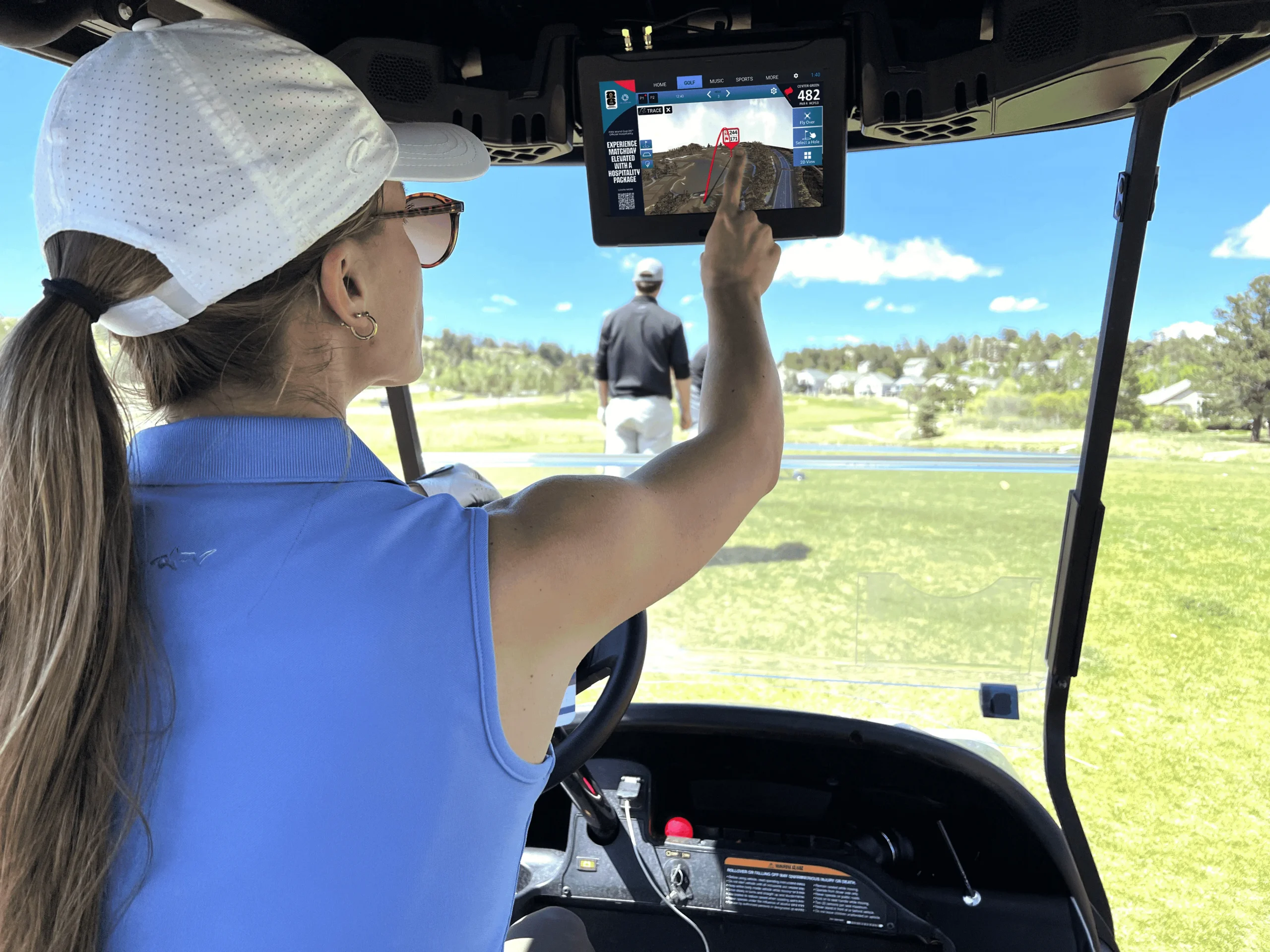
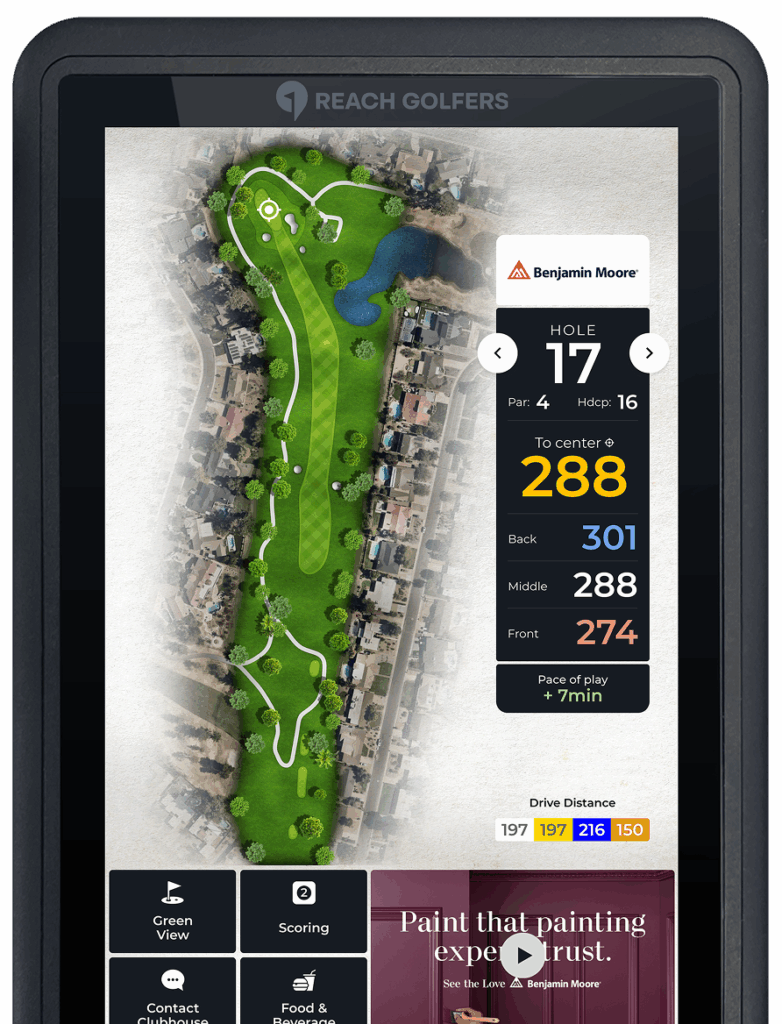
Effective on-screen content includes real-time pin positions, auto-zoom functionality that tracks the golfer’s progress through each hole, and drive distance measurements that provide immediate feedback. These features turn the screen into an active playing companion.
Content timing matters as well. Screens that deliver hole-specific information as the golfer approaches each tee create a rhythm of engagement throughout the round. When golfers come to expect useful data at each transition, checking the screen becomes part of their routine.
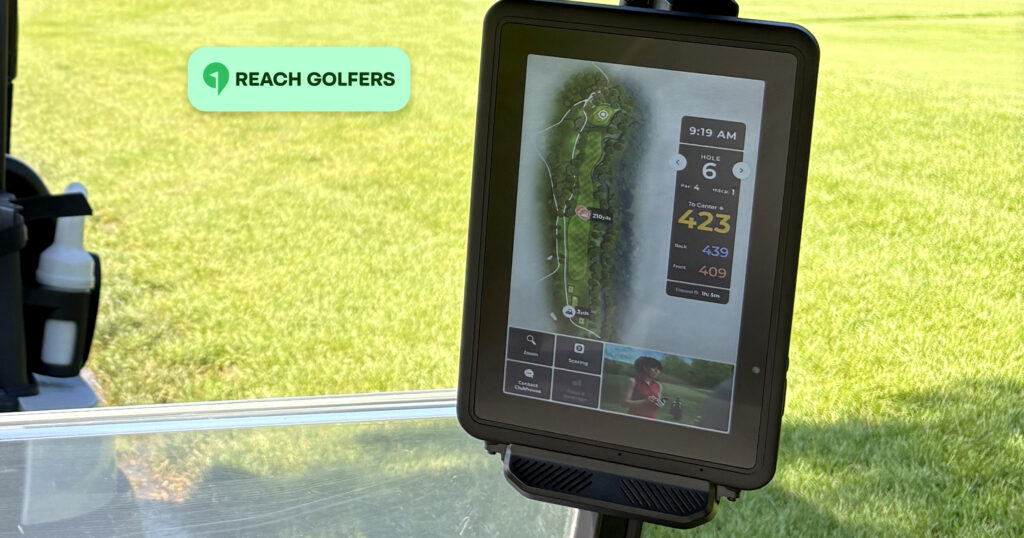
Reach Golfers delivers high-resolution, artistically rendered 3D course maps with dynamic auto-zoom, real-time drive distance tracking, and precise pin positions on every hole. When the screen consistently offers information the golfer cannot get elsewhere during the round, checking it becomes a habit.
Why Does Pace of Play Suffer When GPS Goes Unused?
GPS adoption and pace of play are directly linked. When golfers do not engage with the screen, they lose access to yardage data that speeds club selection, cart-ahead visibility that reduces unnecessary waiting, and pace reminders that keep groups moving without marshal intervention.
According to recent USGA research published in April 2025, the average round time has reached 4 hours and 30 minutes, a new high. In that coverage, pace researcher Lucius Riccio says waiting between shots frustrates golfers as much as total round length, and often more. GPS systems that show golfers where the group ahead is positioned help eliminate unnecessary waiting by giving players confidence to continue play.
Without that visibility, golfers default to conservative behavior: waiting longer at tee boxes, pausing on approaches, and bunching up on par 3s and short par 4s. Each of these delays compounds across the field, shrinking tee sheet capacity and reducing daily rounds played.
How Can Operators Diagnose Low GPS Adoption on Their Course?
Before you can fix an adoption problem, you need to measure it. Many operators assume that because screens are installed and powered on, golfers are using them. The data often tells a different story.
Start by reviewing screen interaction metrics if your system tracks them. Tap rates, F&B order frequency, and pace acknowledgment responses all serve as proxies for engagement. A system that logs zero food orders across a full Saturday suggests golfers are not interacting with the screen at all.
Walk the course and observe. Are golfers looking at the screen when approaching their ball, or are they pulling out personal rangefinders exclusively? Are groups responding to pace alerts, or do alerts go unacknowledged while groups continue at the same speed? These qualitative observations, paired with quantitative system data, paint a clear picture of where adoption stands.
What Makes On-Screen Messaging More Effective for GPS Adoption?
The messages your GPS system sends to golfers determine whether the screen earns attention or becomes background noise. Generic “speed up” alerts frustrate golfers and often produce the opposite of the intended effect. Targeted, contextual messaging gets results.
Effective messaging connects to specific situations. A message that says “Group ahead has cleared the green, you are clear to approach” gives golfers actionable information. A blanket “please maintain pace” message gives them nothing they can act on in the moment.
Direct to cart messaging adds another layer of value. Course staff can message every cart at once with a weather alert or a custom note, and golfers can order food and drinks right from the screen. The screen stops feeling like an authority figure and starts working as a service tool that makes the round better. That shift is where real-time GPS communication starts driving adoption on its own.
How Should Staff Workflows Support GPS Adoption?
GPS adoption takes ongoing work. It needs operational workflows that connect the data from the system to how your team interacts with golfers before, during, and after each round.
At check-in, starters should briefly orient golfers to the screen’s key features. A 15-second overview highlighting yardage accuracy, cart-ahead visibility, and F&B ordering sets the expectation that the screen is a useful tool. This is especially valuable on public courses where many rounds come from first-time visitors.
During the round, staff should monitor the GPS dashboard for groups that are both falling behind and have room open ahead. Using GPS-enabled communication to reach the right golfers at the right moment replaces the old model of sending rangers to patrol blindly. When interventions are data-driven and specific, golfers see them as helpful, which reinforces trust in the system.
What Operational Workflows Improve Pace Through GPS Data?
GPS data does more than track carts. When operators build workflows around the data, pace management becomes a structured, repeatable process.
Hole-by-hole timing data reveals which holes consistently cause bottlenecks. If your data shows that groups spend an average of 20 minutes on a specific par 3 because they are waiting for the green to clear, that insight points directly to a course setup adjustment, whether it is moving the tee forward, adjusting pin placement, or modifying tee time intervals during peak hours.
Starter accuracy is another workflow that benefits from GPS integration. Systems that record when each group actually enters the first tee, compared to their scheduled time, give operators a clear metric for front-of-house efficiency. Courses that track and improve starter accuracy see a cumulative reduction in afternoon pace degradation, because each group starts closer to schedule.
How Does Smart Geofencing Drive Adoption Without Frustrating Golfers?
Geofencing is one of the most powerful GPS features for turf protection and cart management, but poorly executed geofencing actively damages adoption. When alerts fire incorrectly or in the wrong locations, golfers learn to ignore every alert the system produces.
Smart geofencing depends on positioning precision. Systems with significant drift require large buffer zones around restricted areas, which means alerts trigger well before a cart reaches the actual boundary. Golfers who receive a restricted-area warning while sitting squarely on the cart path lose confidence in the system instantly.
Reach Golfers uses smart geofencing that protects turf and prevents cart path violations with on-screen messaging and a restricted-area audible alarm. Screen and ad audio stay off by default. The system does not use cart kill. When boundaries are enforced consistently at their true physical edges, golfers respect the system because it behaves predictably. That predictability is a direct contributor to overall GPS adoption.
How Can Public Courses Measure GPS Adoption Success?
Adoption exists on a spectrum, and the metrics you track determine how effectively you can improve it over time. Public courses should monitor several key indicators.
Screen interaction rate measures how often golfers engage with the display beyond passive viewing. Track F&B orders placed through the system, pace acknowledgment responses, and any interactive features your platform offers. Rising interaction rates signal that golfers are finding value in the screen.
Pace compliance rate tracks the percentage of groups finishing within your target round time. As adoption improves, this number should climb. Every round is tracked, and AI pace of play shows where time is lost.
Golfer feedback is the qualitative layer. Post-round surveys that include questions about the on-cart GPS experience reveal whether the system is enhancing or detracting from the round. Negative feedback about false alerts or irrelevant content identifies specific adoption barriers your team can address.
What Mistakes Do Operators Make When Applying GPS Systems?
The most common mistake is treating GPS as a hardware installation project and stopping there. Mounting screens on carts and assuming golfers will figure it out is a recipe for low adoption and wasted investment.
A second mistake is over-relying on punitive alerts. When the only messages golfers receive from the screen are warnings and pace reminders, the system becomes an adversary. Balancing operational messaging with value-adding content, such as yardage information, hole previews, and ordering capabilities, keeps the relationship between golfer and screen constructive.
A third mistake is ignoring the data the system produces. GPS platforms generate detailed operational insights, from hole timing to fleet utilization to revenue opportunities. Operators who review this data weekly and adjust course setup, staffing, and messaging accordingly create a feedback loop that continuously improves both adoption and outcomes.
How Does Reach Golfers Help Public Courses Improve GPS Adoption?
Reach Golfers approaches GPS adoption as an integrated challenge that spans hardware quality, software design, content delivery, and operational support. The Golf Experience Platform combines high-precision GPS with AI-powered pace of play management, real-time fleet tracking, and direct to cart messaging in a single system built for operator and golfer alike.
The platform’s interactive GPS screens display artistically rendered 3D hole views, real-time yardages, dynamic auto-zoom, and drive distance tracking. These features give golfers compelling reasons to engage with the screen on every hole. Integrated food and beverage ordering turns downtime into revenue while reinforcing the habit of interacting with the display.
For operators, the Reach Golfers dashboard provides real-time visibility into fleet positions, group pace, and course flow. AI-powered analysis identifies bottlenecks hole by hole, and direct to cart messaging lets staff reach the right groups without disrupting others, or message every cart at once. White-glove installation, including device assembly, geofence testing, and full staff training, means your team is equipped to drive adoption from day one.
See how Reach Golfers helps public courses raise GPS screen adoption. Schedule a demo.
Building a Long-Term GPS Adoption Strategy for Your Course
GPS adoption is an ongoing operational discipline. Public courses that keep working on it all season see compounding returns in pace, revenue, and golfer satisfaction over time.
Start by establishing baseline metrics for screen interaction, pace compliance, and golfer feedback. Set quarterly targets and review progress in regular operations meetings. Assign ownership of GPS adoption to a specific staff member, whether that is the head professional, the director of operations, or a dedicated technology manager.
Iterate on your messaging strategy each season. As your golfer population changes and course conditions shift, the content on the screen should evolve to remain relevant and valuable. Courses that update hole renderings, adjust geofence boundaries based on seasonal turf conditions, and refresh on-screen content regularly maintain higher engagement levels than those that install and forget.
Train new seasonal staff on GPS workflows before their first shift, and schedule refresher sessions for returning team members at the start of each season. Consistent staff knowledge translates directly into consistent golfer onboarding, which keeps adoption rates climbing year over year.
The courses that win the adoption challenge treat the GPS screen as a communication channel, a data source, and a revenue tool. When golfers actually use it, it improves every part of the operation.
FAQs About Golf Cart GPS Guidance Adoption
Why do golfers ignore GPS screens on golf carts?
Golfers disengage when yardage data is inaccurate, on-screen content is static or irrelevant, or alerts fire in incorrect locations. Systems that deliver precise, real-time information earn attention. Those that do not train golfers to look elsewhere for course data.
How does GPS adoption affect pace of play on public courses?
When golfers use GPS screens, they access yardage data and cart-ahead visibility that speeds up club selection and reduces unnecessary waiting. Higher adoption correlates with shorter average round times and fewer staff interventions for pace issues.
What features improve GPS screen engagement for golfers?
Reach Golfers improves engagement through high-resolution 3D course maps, dynamic auto-zoom, real-time drive distance, and integrated F&B ordering. These features give golfers a reason to use the screen on every hole.
How can course operators measure GPS adoption rates?
Track screen interaction rates, F&B orders placed through the system, pace acknowledgment responses, and overall pace compliance percentages. Pair quantitative data with post-round golfer feedback surveys to identify specific adoption barriers.
Does geofencing help or hurt GPS adoption on golf courses?
Geofencing helps adoption when boundaries are accurate and alerts are predictable. Reach Golfers uses smart geofencing with on-screen messaging and a restricted-area audible alarm golfers learn to trust because the system behaves consistently at true physical boundaries. It does not stop the cart.
What is the first step to improving GPS adoption at a public course?
Start by measuring current engagement through screen interaction data and on-course observation. Identify whether the primary barrier is accuracy, content relevance, messaging quality, or staff workflow gaps, then address the highest-impact issue first.